Sherry Turkle and Michael Wesch approach technology's role in communication from two different vantage points: Turkle suggests that technology inhibits human interactions and conversation, a dying art in this day and age, and Wesch seems to be in favor of fully embracing technology as a platform for dialogue and interaction. Neither professor condemns technology, but they do appear to take opposing standpoints as to what it does to face-to-face interactions. They also vary greatly on the way in which they approach solutions to the problem.
Turkle notes that people are intrinsically linked to their devices and seem to have lost the art of having conversations as well as being alone. She points out how when we are alone for more than a few minutes, we instinctively reach for our devices. She says that we tend to look at little "sips" of online conversations through social media and texting as combined gulps, when in reality, people are scripting a artificial personas online; we edit our posts, we are limited by characters, we choose how to portray ourselves through the photos we exhibit, and we essentially make it easier NOT to communicate authentically with people.
She uses the example of a man who claims that people in his office don't want to be bothered, but after a minute of self-reflection writes, “I’m not telling the truth. I’m the one who doesn’t want to be
interrupted. I think I should. But I’d rather just do things on my BlackBerry.” I can't tell you how often I have been that man, not interested in engaging in conversation because it is easier and "safer" to text. She points out that young people, as in the case of the sixteen-year-old boy she mentions, would like to "learn how to have a conversation." As a remedy to this problem, Turkle argues that we must have technology-free zones in our homes or cars, and take a stance for a no-technology day (or even hour) in our classrooms or offices, from time to time. I wholeheartedly agree with Turkle's advice. It is nice to put aside the Words With Friends once in a while for the sake of genuine conversation. I worry for my two boys who are ten and eleven years old; I want them to be able to share stories and forge friendships and relationships in conjunction with their online personas. I want their memories to consist of real life experiences versus the virtual reality they already have through their iPod touches, XBox, digital cameras, video cameras, and laptops. I don't want to shield them from technology, but I want them to be able to function apart from it. So far, they seem to be okay doing just that.
Wesch agrees with Turkle that connecting with people, especially our students, has become more arduous in this day and age when the primary questions being asked in the classroom are non-substantive ones such as "Is this going to be on the test?" He shows how the traditional teacher-at-podium class lecture model no longer works with our students who simply tune out and shop online, text while looking directly at us, or catch up on Twitter and Facebook as we teach.
He says that we need to change the physical layout of our classrooms and rid ourselves of the old mold; we need to recreate a community where we are all on our devices simultaneously together. In this way, he directly contradicts Turkle's notion that we are "alone together." He says that educators need to think of ways to inspire our students to ask thoughtful questions, so why not use a medium with which they are comfortable? Just as we would never articulate, "some students are just not cut out for learning," we should approach teaching from a new perspective; his self-coined "anti-teaching." In other words, we need to create interactive digital space in the classroom to get the dialogue started.
I believe that both authors share valid and equally important points. There is a time and place for technology, and, as Turkle states, there is a time and place without it. These professors show two sides of the coin, and I actually feel that they would agree with each other if they were to engage in a dialogue about their points. They are both right: why not make our technology a means of creating dialogues when we use it, and why set aside times for authentic, "old-school" conversation? Both authors offer smart approaches for utilizing technology appropriately. Both are interested in preserving the dying art of asking and answering thoughtful questions, regardless of whether in person or on-line. Although I personally am more of Turkle's school philosophically, I absolutely agree with Wesch that it is imperative to make my own classroom relevant to my students' lives.
Sunday, July 6, 2014
Gender Stereotypes video
Gabe, Graham, Mary and I put this video together in about an hour. As we discussed during class, our lack of experience with stop motion film technology inhibited us from recording the full script; this could be a problem that any of us would encounter during class with our students. In spite of this minor setback which we were able to address when Mary presented and explained our project to the class, we all agreed that this was a valuable experience and one that I will definitely be repeating with my Spanish students! I enjoyed the process as well as the learning; we were able to take a topic and make it our own. I think that this kind of activity has an important place in the classroom!
Wednesday, July 2, 2014
Seventh Graders and Sexism: one teacher's attempt to analyze media stereotypes in class
In her article Seventh Graders and Sexism, Latino author and teacher Lisa Espinosa brings her own experiences of having grown up in a traditional Mexican family with ingrained gender stereotypes to the forefront of her classroom discussions with her seventh graders in Chicago's South Side. Espinosa, who had her first child as a college freshman and a total of four children in the eight years it took her to complete schooling, noticed a trend among young Latino women like herself who become teen mothers. She asserts that expectations in her community were different for boys and girls; boys were expected to be independent, strong, and heads of households while girls were expected to obey authority, cook, do chores, and be nice. If in this scenario, "authoritative" figures were developing Mexican male teenagers, it is no wonder that so many young girls in Espinosa's community were becoming pregnant. As a third year teacher, Espinosa noticed similar patterns unfolding with her own male students who used derogatory language like "gay" and "faggot" to display their masculinity, and her female students who aspired to "find a guy to take care of me" or "get married," as she writes. Subsequently, she decided to design a language arts unit around gender biases.
Espinosa began to create her own classroom text by gathering resources with the help of the bilingual teacher and through research of articles, many of which were complex and subsequently read during class time, with a set of vocabulary to augment the words for her mainly Spanish-speaking class of 31 students. She found an excellent resource in a magazine called REP, which is published by Men Can Stop Rape. They engaged in activities like a mini-SCWAAMP where her students made and discussed posters defining how to "Be Ladylike" and "Act Like a Man."
When in-class discussions did not seem to provoke deep critical thinking and conversation from her seventh graders, Espinosa began to encourage ungraded "free writing" where she saw true reflection and analysis from her students take shape. Formally graded narratives began to reflect fictitious stories with graphic descriptions of hateful stereotypes, but with student-created resolutions to the problems at the end of their stories. Some stories, "although fictionalized, seemed very autobiographical." Espinosa's regret about her own teaching is that she didn't encourage more formal essays.
Finally, Espinosa had her students collectively make collages to either counter or reaffirm gender stereotypes. Using magazines that she could find and incorporating as many with people of color, groups of three to four kids worked feverishly to clip out images and words to fit the assignment they were given. For example, one group portrayed men in untraditional gender roles. If students found images to fit another group's assignment (say, women in traditionally subservient roles), they would eagerly share their cutouts with each other.
The message of this article, for me, was to take Espinosa's ideas and shape them into my own way of targeting gender stereotypes among my predominately white middle class students at Norton High School. As a relatively new teacher, Espinosa was able to help students who mirrored her younger self reflect more deeply on what drives them to follow or defy stereotypes. I would be interested in a follow-up to this article: What happened to those kids?
Espinosa began to create her own classroom text by gathering resources with the help of the bilingual teacher and through research of articles, many of which were complex and subsequently read during class time, with a set of vocabulary to augment the words for her mainly Spanish-speaking class of 31 students. She found an excellent resource in a magazine called REP, which is published by Men Can Stop Rape. They engaged in activities like a mini-SCWAAMP where her students made and discussed posters defining how to "Be Ladylike" and "Act Like a Man."
When in-class discussions did not seem to provoke deep critical thinking and conversation from her seventh graders, Espinosa began to encourage ungraded "free writing" where she saw true reflection and analysis from her students take shape. Formally graded narratives began to reflect fictitious stories with graphic descriptions of hateful stereotypes, but with student-created resolutions to the problems at the end of their stories. Some stories, "although fictionalized, seemed very autobiographical." Espinosa's regret about her own teaching is that she didn't encourage more formal essays.
Finally, Espinosa had her students collectively make collages to either counter or reaffirm gender stereotypes. Using magazines that she could find and incorporating as many with people of color, groups of three to four kids worked feverishly to clip out images and words to fit the assignment they were given. For example, one group portrayed men in untraditional gender roles. If students found images to fit another group's assignment (say, women in traditionally subservient roles), they would eagerly share their cutouts with each other.
The message of this article, for me, was to take Espinosa's ideas and shape them into my own way of targeting gender stereotypes among my predominately white middle class students at Norton High School. As a relatively new teacher, Espinosa was able to help students who mirrored her younger self reflect more deeply on what drives them to follow or defy stereotypes. I would be interested in a follow-up to this article: What happened to those kids?
Tuesday, July 1, 2014
Disco Mickey Mouse
As a tomboy, I have very few memories of ever watching, much less liking, traditional Disney movies. I distinctively remember my first movie theater movies, none of which fit the "traditional" mold of children's classics. They were Barbara Streisand's Yentl with my best friend and neighbor, Arthur, and his mother Lita who took us (we were about 10); A Coalminer's Daughter, with my ex-aunt Debbie at a tiny movie theater in downtown Attleboro (maybe I was 7?); and Star Wars with my father when I was about five years old. I remember the smells of the theaters, the glamour of the experience, and most of all, the adults with whom I went and our ensuing discussions after each movie. It's strange in hindsight that I had exposure to sophisticated adult themes like cross-dressing, severe alcoholism and poverty, and space wars (well, that's not as sophisticated) at such a young age. I don't really recall the themes of the movies as much as the music, the dark movie theater lighting, the vaguely musty smell during A Coalminer's Daughter, and the feeling of being very glamorous and sophisticated. My earliest Disney exposure was actually through music; my first record: Disco Mickey Mouse. I was obsessed with not only the title track featuring Mickey himself, but also "Macho Macho Duck" featuring Donald. I just LOVED that song and would dance around my cellar to the uplifting and badass lyrics saying something about Donald being a "keen and a real sensation," or whatever they were mumbling because I didn't really understand it. In fact, I was totally bored by the girly songs and any girly princess movies back before princesses were really a thing. For me, they weren't even a part of my life until I joined an area moms' club when my boys were one and two, and every other mom in the group had little girls obsessed with princesses. I absolutely HATED it, but I couldn't quite pinpoint why. My two younger sisters, on the other hand, grew up loving all things girly including the Disney classics (maybe we saw Snow White but I honestly don't remember), My Little Ponies, and Strawberry Shortcake. I was more interested in playing cops and robbers and "office" with my best friend and all of the neighborhood boys. I loved imagining laboratories and received presents from Santa such as Giant Ant Farms, Capsella, and microscopes. I never felt traditionally girly until I was about thirteen years old and discovered makeup. My image insecurities began to develop as a young teen when I "betrayed" my father by becoming a girl, and somehow became less worthy, even trustworthy, in his mind. My becoming a young woman was the beginning of the demise of my deeply instilled confidence from a young age; it was almost like a vice that wedged a divide between my father and me and began to gnaw at my self esteem as I realized that physical beauty was more greatly valued than intellect in my small world at thirteen.
Linda Christensen points out many hidden messages in mainstream Disney movies, including my personal favorite, Peter Pan, which I probably saw for the first time on and old VCR player as a teenage babysitter. I loved the music and the pirate scenes, but I didn't at the time read into subliminal messages teeny tiny Tinkerbell was portraying with her own self loathing or the negativity/"darkness"/plumpness equaling negative depiction of the pirates. Actually, before reading Christensen's article, I thought of Peter Pan as a benign princess-less tale and a really cool ride in Disney World, which my family and I visited twice in my formative years when I was six and then thirteen. Christensen's former student, Lila Johnson, further illustrates the grave danger involved in typical princess culture; white, fair complected, light-eyed, impossibly adorable and lovable women who exuded happiness when presented with their perfect princes. Even though I wasn't specifically exposed to the Disney movies at length as a kid, I still valued those same ideals that I wasn't: I wasn't blonde enough, blue-eyed, stick skinny (even though in hindsight, I was thin), or traditionally beautiful with my Irish pancake knees. I always felt like I didn't measure up to the stereotypical perfection that I saw on Doublemint Gum commercials, every TV show including "The Love Boat," "Fantasy Island," "Three's Company", and my favorite, "The Dukes of Hazzard", and in the eighties, MTV. I felt like an outsider even within my culture of power as a white Christian female from a middle-class suburb. I felt, well... less worthy.
Seeing Brave this afternoon was better than I anticipated but still somehow demeaning to me in its message. It was Disney's attempt to undo the harm of their princess culture; to explain the traditional virtues and behaviors of a "princess" and to reverse the stereotype through its protagonist, Merida. I admittedly watched it from a cynical perspective knowing that this princess culture has skewed many children's views of themselves, even now that we're adults. I also had taken an advertising and media course as part of my undergrad studies at UMass Amherst where professor Sut Jhally pointed out hundreds of instances of subliminal objectification of women and minorities and brand placement in movies, advertisements, videos, and television programs. As Christensen's students asked her, we asked Professor Jhally, "Can you look at tv the same again?" The answer is a resounding no. Even in watching Brave, as a non-princess-kid, I was aggravated with Merida's education of a princess's role. Regardless of her rebellious nature, the film continued to instill the concept of "this is what a princess is to do." As a mother, I was offended by Merida's wish to change her mother rather than the societal image of women as objects to be won over. It bugged me. I also didn't like the gratuitous violence among the men; the machismo which was clearly belittled by Disney (men were objectified as well) but nevertheless instilled thoughout the film. I didn't feel like there were too many instances of bravery as the title proclaims, but rather, circumstantial happenings that were fortuitous. I know that the message was intended to be good, but somehow, it didn't leave me feeling invigorated. Maybe I'm being too cynical because Brave is certainly a step in the right direction and also entertaining, but I was left feeling underwhelmed by the attempt to strengthen the role of the female protagonist who happens to be a princess. True to my tomboy nature, I suppose, I still don't like princesses.
Linda Christensen points out many hidden messages in mainstream Disney movies, including my personal favorite, Peter Pan, which I probably saw for the first time on and old VCR player as a teenage babysitter. I loved the music and the pirate scenes, but I didn't at the time read into subliminal messages teeny tiny Tinkerbell was portraying with her own self loathing or the negativity/"darkness"/plumpness equaling negative depiction of the pirates. Actually, before reading Christensen's article, I thought of Peter Pan as a benign princess-less tale and a really cool ride in Disney World, which my family and I visited twice in my formative years when I was six and then thirteen. Christensen's former student, Lila Johnson, further illustrates the grave danger involved in typical princess culture; white, fair complected, light-eyed, impossibly adorable and lovable women who exuded happiness when presented with their perfect princes. Even though I wasn't specifically exposed to the Disney movies at length as a kid, I still valued those same ideals that I wasn't: I wasn't blonde enough, blue-eyed, stick skinny (even though in hindsight, I was thin), or traditionally beautiful with my Irish pancake knees. I always felt like I didn't measure up to the stereotypical perfection that I saw on Doublemint Gum commercials, every TV show including "The Love Boat," "Fantasy Island," "Three's Company", and my favorite, "The Dukes of Hazzard", and in the eighties, MTV. I felt like an outsider even within my culture of power as a white Christian female from a middle-class suburb. I felt, well... less worthy.
Seeing Brave this afternoon was better than I anticipated but still somehow demeaning to me in its message. It was Disney's attempt to undo the harm of their princess culture; to explain the traditional virtues and behaviors of a "princess" and to reverse the stereotype through its protagonist, Merida. I admittedly watched it from a cynical perspective knowing that this princess culture has skewed many children's views of themselves, even now that we're adults. I also had taken an advertising and media course as part of my undergrad studies at UMass Amherst where professor Sut Jhally pointed out hundreds of instances of subliminal objectification of women and minorities and brand placement in movies, advertisements, videos, and television programs. As Christensen's students asked her, we asked Professor Jhally, "Can you look at tv the same again?" The answer is a resounding no. Even in watching Brave, as a non-princess-kid, I was aggravated with Merida's education of a princess's role. Regardless of her rebellious nature, the film continued to instill the concept of "this is what a princess is to do." As a mother, I was offended by Merida's wish to change her mother rather than the societal image of women as objects to be won over. It bugged me. I also didn't like the gratuitous violence among the men; the machismo which was clearly belittled by Disney (men were objectified as well) but nevertheless instilled thoughout the film. I didn't feel like there were too many instances of bravery as the title proclaims, but rather, circumstantial happenings that were fortuitous. I know that the message was intended to be good, but somehow, it didn't leave me feeling invigorated. Maybe I'm being too cynical because Brave is certainly a step in the right direction and also entertaining, but I was left feeling underwhelmed by the attempt to strengthen the role of the female protagonist who happens to be a princess. True to my tomboy nature, I suppose, I still don't like princesses.
Monday, June 30, 2014
Where I stand in the digital world
After watching Mike Wesch's video "The Machine is Us/ing Us", I felt a sense of simultaneous awe and dismay at how much we are able to do with technology. As Wesch flew from phrase to link to HTML in the course of four intense minutes, I watched with admiration of the process, but with a sense of foreboding that I am unable to race from screen to screen, understand embedded language, and manipulate web pages with such ease and grace so as to quickly reformat information in my own blog. Prensky would likely point out that Wesch's video is attuned to the mind of the digital native who multitasks, no longer reads linearly, and is easily bored by the traditional "lecture"/textbook format that is not relevant to their lives. While watching Wesch's video, I instantly thought of the "techies" in my life, NONE of whom are my students. I pictured two math teachers, a debate coach, and my professor, Dr. Rudolf Krauss, from last semester. I picture Wesch as an adult; a middle-aged white male, even though I've never seen him. After reading chapter 7 of Danah Boyd's It's Complicated, I began to think even more about the term "digital native" and its implications on today's youth.
I wholeheartedly agree with Boyd's thorough dissection and analysis of the digital native- the term used for young people raised in a technological world and are often assumed to be able to navigate the technology at their fingertips. Boyd points out that technological savvy may vary greatly from teen to teen; not all teens are necessarily proficient with technology and even fewer truly understand how to navigate the internet while being aware of biases. First and foremost, technical proficiency depends on access, and not all students have the same level of access to computers and laptops. If access is limited to public places like schools and libraries, how is that a level playing field compared to students with unlimited access to the internet in their own homes? How can a student with no home computer in an impoverished school district be compared to a student in a wealthy district where every student is issued an iPad at the beginning of the year, as has been in Weston and Dover Massachusetts?
Boyd shows just why it is important for us as educators to help guide our students. She writes that some students knowingly go on "forbidden" websites to cite information that they know their teachers will likely not check. Boyd uses the example of the oft-reviled Wikopedia as a teacher-labeled "untrustworthy" source of information because it can be edited.
I actually was reprimanded by my own students this year in Spanish 2 for using Wikopedia to provide background information on Mexican artist Frida Kahlo. I was thinking that everything seemed valid, however, I cross-referenced all of my information with other websites just to ensure I was providing accurate information. I was actually impressed with Wikopedia's explanation of Kahlo's volatile marraige and bisexuality- it was valid. Boyd shows that the admonition of Wikopedia may be premature; in fact, the site provides multifaceted view of historical events which are direct critiques of traditional textbook renditions. It is both stides of the coin verses one side, and it is and evolving document. Wikopedia has an edit page containing histories and explanations behind edits. Furthermore, they post their most common hoaxes. Boyd demonstrates that Google, teachers' "trustworthy" search engine, is often skewed based on your search history. I imagine a liberal college debate student being led to liberal websites that resemble past searches. Similarly, a staunch republican college debate student may be led to different sites based on his or her previous searches. In other words, it is a manipulation of what Google thinks we want to read; it also can be biased.
Whether we are talking about the teenagers we teach or the colleagues with whom we work, it is imperative that we not only use the media wisely, but help to navigate our students and colleagues through sites while understanding and keeping in mind the hidden messages in the media. Just because our students may use Facebook, Twitter, Vine, and Instagram like pros does not mean that they are computer experts who know how to find and even produce relevant information. But as Prensky points out, our students want information easily and are used to acquiring it quickly via the internet, a quick Google search, and through the instant gratification of accessing friends online 24/7. The assumption that students are "digital natives" is often oversimplified; they are born into a world of technology, yes; but does that give them a "native" instinct as to how to use it? In my mind, the answer is no. Again, the "digital natives" I picture happen to be middle-aged white men who work with computers as part of their livings. Maybe these men are "immigrants", but they've mastered the native language as well if not better than most "natives" I know. I would hate to be an imperialistic immigrant who squelches the culture of my digitally native students.
I wholeheartedly agree with Boyd's thorough dissection and analysis of the digital native- the term used for young people raised in a technological world and are often assumed to be able to navigate the technology at their fingertips. Boyd points out that technological savvy may vary greatly from teen to teen; not all teens are necessarily proficient with technology and even fewer truly understand how to navigate the internet while being aware of biases. First and foremost, technical proficiency depends on access, and not all students have the same level of access to computers and laptops. If access is limited to public places like schools and libraries, how is that a level playing field compared to students with unlimited access to the internet in their own homes? How can a student with no home computer in an impoverished school district be compared to a student in a wealthy district where every student is issued an iPad at the beginning of the year, as has been in Weston and Dover Massachusetts?
Boyd shows just why it is important for us as educators to help guide our students. She writes that some students knowingly go on "forbidden" websites to cite information that they know their teachers will likely not check. Boyd uses the example of the oft-reviled Wikopedia as a teacher-labeled "untrustworthy" source of information because it can be edited.
I actually was reprimanded by my own students this year in Spanish 2 for using Wikopedia to provide background information on Mexican artist Frida Kahlo. I was thinking that everything seemed valid, however, I cross-referenced all of my information with other websites just to ensure I was providing accurate information. I was actually impressed with Wikopedia's explanation of Kahlo's volatile marraige and bisexuality- it was valid. Boyd shows that the admonition of Wikopedia may be premature; in fact, the site provides multifaceted view of historical events which are direct critiques of traditional textbook renditions. It is both stides of the coin verses one side, and it is and evolving document. Wikopedia has an edit page containing histories and explanations behind edits. Furthermore, they post their most common hoaxes. Boyd demonstrates that Google, teachers' "trustworthy" search engine, is often skewed based on your search history. I imagine a liberal college debate student being led to liberal websites that resemble past searches. Similarly, a staunch republican college debate student may be led to different sites based on his or her previous searches. In other words, it is a manipulation of what Google thinks we want to read; it also can be biased.
Whether we are talking about the teenagers we teach or the colleagues with whom we work, it is imperative that we not only use the media wisely, but help to navigate our students and colleagues through sites while understanding and keeping in mind the hidden messages in the media. Just because our students may use Facebook, Twitter, Vine, and Instagram like pros does not mean that they are computer experts who know how to find and even produce relevant information. But as Prensky points out, our students want information easily and are used to acquiring it quickly via the internet, a quick Google search, and through the instant gratification of accessing friends online 24/7. The assumption that students are "digital natives" is often oversimplified; they are born into a world of technology, yes; but does that give them a "native" instinct as to how to use it? In my mind, the answer is no. Again, the "digital natives" I picture happen to be middle-aged white men who work with computers as part of their livings. Maybe these men are "immigrants", but they've mastered the native language as well if not better than most "natives" I know. I would hate to be an imperialistic immigrant who squelches the culture of my digitally native students.
I am a digital immigrant
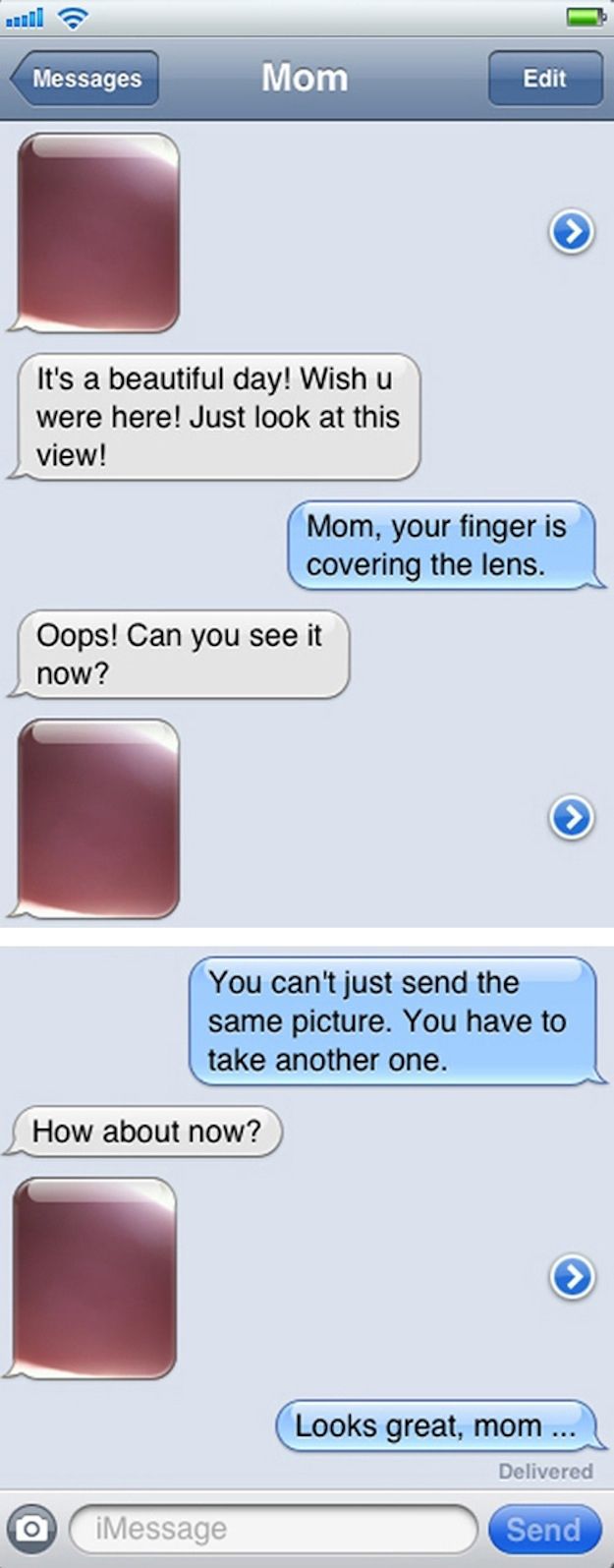
I am certain that I am a digital immigrant in spite of trying to be "cool" with technology. (Clearly, I am totally outdated, but I try!!!) I find that the more I try to use technology, the more it backfires, but since I have some nice new updates with our recent renovations at Norton High School, I've taken on more than ever this year. We now have Smartboards in all of our classrooms, and once I got past reaching for my whiteboard markers instead of my digital marker, it started to go uphill. For starters, my students signed me up for Twitter, and now I am obsessed. I have the kids tweet me their favorite Spanish songs, links to latino authors and artists, and provide feedback about their homework. The problem is that I tweet all day and all night long, much to the chagrin of my husband and two boys. Just a couple of weeks ago, I got my first iPhone, and now I have other exciting social media outlets like Vine and Instagram. I try to take one picture and end up holding down my camera's button too hard, snapping at least 36 pictures at a time. It takes me forever to post on Instagram, but I've managed to put up a smattering of pictures of flowers and my family. The nice thing about being an immigrant and teaching in a high school is that the kids really help me with all things digital. They also keep me posted on the necessary lingo, such as thot (that hoe over there), sus (suspicious), and being huud. I find that it's nice to be an immigrant; I don't really want my passport into the full technology world. It's a lot of pressure and very time consuming, as "using the Facebook, the Tweet, the Instagram, and the Vine" have shown me. I like being an "InstaGrandma." When I was driving a former NHS student- our most spirited graduate- home from the senior play this year, unbeknownst to me, he recorded me for his nightly YouTube video. (Well, you hear my voice.) That's about all the publicity I can handle at this point. I can't seem to link in that particular video, so here's another one instead of our famous weather magician, Peter.
| "I love using the Tweet!" |
SED 501 Summer 2014
Hello! My name is Amy Mahoney and I am excited to be taking this Media Literacy course with Dr. Bogad. I majored in journalism and Spanish at UMass Amherst, and I love learning about anything media-centered. I'm an avid "tweeter" on Twitter; it's a fun way to connect with my students outside of class, and it's actually encouraged by my administrators at Norton High School, where I teach Spanish. This is my first every summer graduate course; I'm in the ASTL program with the Fall 2013 cohort, a.k.a. #TheCohort. In fact, Dr. Bogad was my first professor here at RIC; I am taking this course because I had an amazing and eye-opening experience with her already. I hope to be spending all of my "down" time in Narragansett with my family, but I'm taking another week-long class in Norton in late July.
Subscribe to:
Posts (Atom)
